There is a version of this story that gets told at conferences. It goes like this: the Gulf is flush with capital, is making gestures towards healthcare modernisation, and will eventually become an interesting market for Western technology companies. That version is wrong in almost every particular.
What is actually happening is structurally different and moving faster than most observers outside the region understand. M42, formed from the merger of G42 Healthcare and Mubadala Health, now operates more than 480 facilities across 26 countries and employs over 20,000 people. Before the merger, Mubadala Health had already established the standard of clinical excellence this sovereign vision is built on, through institutions including Cleveland Clinic Abu Dhabi, Imperial College London Diabetes Centre, and Moorfields Eye Hospital Abu Dhabi. These are not regional facilities. They are world-class specialist institutions operating under sovereign ownership, and they define the clinical bar against which every technology partnership is now evaluated.
M42 is not a holding company waiting for direction. It is an active platform deploying capital, building genomic infrastructure, and sourcing clinical technology partnerships at sovereign scale. In the span of twelve months it announced collaborations with Oracle Health on pharmacogenomic point-of-care integration, with GE HealthCare on AI-enabled diagnostics, with AstraZeneca and SOPHiA GENETICS on liquid biopsy cancer diagnosis, and published breakthrough results from an AI tuberculosis screening study analysing over one million chest X-rays. It has also developed Med42, a 70 billion parameter clinical large language model trained on curated medical knowledge that outperformed ChatGPT 3.5 on the United States Medical Licensing Examination. The Gulf is not simply deploying third-party AI. It is building sovereign clinical AI infrastructure of its own, and it is looking for validated specialist technology to complement it.
These are not aspirational partnerships. These are funded, operational programmes with institutional accountability behind them. Saudi Arabia's Vision 2030 has placed a $100 billion investment at the core of its healthcare transformation, while the UAE AI Strategy 2031 is explicitly designed to establish the Emirates as a global leader in AI integration across healthcare, education, and transportation.
The Middle East AI healthcare market, valued at $435 million in 2024, is projected to reach $8.4 billion by 2033, a compound annual growth rate of nearly 37 percent. McKinsey's 2025 survey of GCC organisations found that while 84 percent have now adopted AI in some form, only 11 percent qualify as genuine value realisers — organisations that have scaled deployment and can attribute measurable earnings to AI. The capital is committed. The mandates are sovereign. The infrastructure is under construction. The execution gap is real, and closing it is the work of this decade.
The Gap Is Clinical Evidence, Not Technology
I have worked across the NHS for nearly two decades, in emergency medicine, cardiology, and primary care. I serve as a senior clinical advisor to a range of healthcare organisations, from governmental bodies and established companies to startups developing clinically validated technology, and I advise on clinical pathway integration and regulatory strategy. The question I am asked most often, by Gulf health system buyers and sovereign investors alike, is not whether a technology is innovative. It is whether it works in a real clinical environment.
That distinction matters more than it might appear. The Gulf's healthcare AI ambition is not academic. Abu Dhabi's Malaffi platform now connects 100 percent of hospitals and clinics across the emirate, enabling instant sharing of patient records. The Emirati Genome Program is among the largest national genomics initiatives in the world. These are not pilot projects. They are live infrastructure, and the clinical AI being integrated into them needs to have been validated in systems that operate at scale, under pressure, with real patients and real clinical consequences.
BCG's research across Gulf organisations identifies what it calls the 10-20-70 framework for AI transformation success: only 10 percent of outcomes are determined by algorithms, 20 percent by technology and data, and 70 percent by people, processes, and organisational design. Gulf health system leaders already think in these terms. The implication for any company entering this market is clear: technical performance is the entry requirement, not the differentiator. What determines deployment success is everything that surrounds the technology.
This is where the evaluation framework I apply in practice becomes critical. When I assess a healthcare AI company, I look for four things. First, clinical robustness: has the technology been tested in a genuine clinical environment, not a controlled trial setting optimised for publication? Second, health economic impact: can it demonstrably reduce costs, improve workflow efficiency, or reduce time to diagnosis in a way that a procurement committee can model? Third, regulatory and reimbursement readiness: does it hold CE marking, FDA clearance, or a mapped pathway to NICE or equivalent approval? And fourth, clinical pathway integration: not just whether the technology works in isolation, but whether it fits into how clinicians actually work, under the pressures they actually face.
Gulf sovereign buyers are sophisticated. They have access to global technology. What they cannot easily access is independent clinical evidence from systems that are analytically comparable to what they are building. An AI diagnostic tool that has been validated across NHS trusts, published in peer-reviewed journals, and integrated into real clinical pathways is a fundamentally different proposition from one that has merely demonstrated accuracy in a dataset. The NHS, for all its operational pressures, produces exactly the kind of real-world validation evidence that Gulf health systems require before committing sovereign capital to deployment at scale.
Why Nordic Healthtech Is Unusually Well Positioned
The Nordic countries occupy a distinctive position in global healthcare AI. Investors in the sector consistently identify AI and healthcare automation as the most impactful trends of the next decade, with deep capability concentrated in diagnostics and medical imaging in Norway and Sweden, digital health platforms in Denmark, and life sciences innovation across Finland. These are not emerging competencies. They are multi-decade capabilities built on top of universal healthcare systems that generate longitudinal patient data at a population level, require rigorous clinical validation before procurement, and demand evidence of health economic impact as a condition of adoption.
The clinical validation infrastructure that Nordic health systems provide produces technology companies with exactly the evidence base that Gulf sovereign buyers require. A Nordic AI diagnostic company that has secured a framework agreement with a major Scandinavian health region, published peer-reviewed validation data, and demonstrated measurable workflow improvement in a high-volume clinical environment is carrying credentials that are directly relevant to what M42, the Saudi Public Investment Fund, and Mubadala Health are looking to deploy.
What makes this particularly significant is the nature of the validation itself. Nordic public health systems are chronically under-resourced relative to demand. The technologies that survive procurement in Oslo, Stockholm, or Copenhagen have been tested under genuine clinical pressure, not in optimised trial conditions. That stress-testing is precisely what Gulf health systems need to see before deploying AI diagnostics at national scale. This matters more today than it did five years ago. McKinsey research shows that public confidence in AI providers has fallen from 61 percent in 2019 to 53 percent in 2024, and that only organisations demonstrating explainability, transparency, and proven real-world outcomes will overcome clinical adoption resistance at scale. Nordic health systems, with their regulatory rigour and published outcome requirements, produce exactly that evidence. The gap between Nordic capability and Gulf deployment is not capability. It is access, and understanding of how that access is built.
Where Nordic Companies Get It Wrong
I have spent years watching clinically excellent companies arrive in Abu Dhabi and Riyadh with strong evidence packages and leave without progress. The technology was not the problem. The approach was.
There is a pattern that repeats itself. A Nordic healthtech company achieves genuine clinical validation in its home market. It attends Arab Health or HIMSS Middle East. It secures a meeting with a procurement lead at a major Gulf health system. The presentation is technically rigorous, the data is clean, the regulatory pathway is mapped. And then silence. Not because the technology was wrong. Because the conversation started in the wrong place.
I was in one of those rooms not long ago. A Nordic biotech and a Gulf partner. Both sides were technically right, their data was sound, their intentions were genuine, their strategic interests were aligned on paper. But the meeting was going nowhere. The two sides were speaking past each other with complete precision. I stopped the meeting, drew the shared goals on a whiteboard, and reframed the conversation from who is right to what is right. The deal that followed was not a result of better technology or a stronger pitch. It was a result of a shared understanding of purpose.
What shifted that conversation was not data. It was a moment when one of the founders mentioned that his father's illness had been the original inspiration for building the company. The room changed. Gulf capital does not move primarily on slide decks, however compelling. It moves on trust that has been established before the meeting, on a sense that a potential partner grasps not just the clinical problem but why solving it matters, to patients, to families, to a generation of people the Gulf's sovereign health vision is being built for. The Nordic founder who understands that shift changes the conversation entirely. The one who does not leaves wondering what went wrong.
This is not a weakness in Nordic companies. It is a description of a structural gap between how clinical technology is validated and commercialised in Northern Europe and how it is evaluated and adopted in the Gulf. The competencies required to bridge that gap are genuinely rare: cultural fluency, institutional relationship architecture, clinical credibility on both sides of the conversation, and an understanding that the technology, however good, is never the rate-limiting factor. Too many healthtech companies mistake incorporation for market entry. They set up a licence in Dubai Healthcare City, issue a press release, and wait for traction. What they get instead is silence.
What the Right Entry Actually Looks Like
The companies that succeed in the Gulf share a common characteristic. They entered with a partner who understood the local system before they did, and they treated clinical validation as a commercial asset rather than a regulatory checkbox.
Gulf sovereign institutions are not running a procurement exercise. They are selecting partners for a multi-decade infrastructure build. A company that positions itself as a vendor will be evaluated as one. A company that positions itself as a clinical partner, with the evidence base to support that claim and the relationship architecture to make it credible, is in a different conversation entirely. BCG's most recent GCC research found that one in four Gulf companies plans to invest over $25 million in AI in 2025 alone, and more than 70 percent of executives now rank AI as a top three strategic priority. The buyers are ready, the budgets are allocated, and the mandates are active. What most Nordic companies underestimate is how much of that decision process happens before any formal meeting takes place.
For Nordic healthtech companies, the practical implication is this. The four pillars that determine Gulf deployment success are clinical validation, health economic evidence, regulatory readiness, and clinical pathway integration, in that order, and each needs to be demonstrated rather than asserted. A tool that has been validated across multiple sites, shows measurable cost or workflow impact, holds CE or FDA clearance, and has been co-developed with frontline clinicians carries a fundamentally different risk profile for a Gulf sovereign buyer than one that has not.
When a procurement committee, a clinician, and a health ministry are not aligned, no technology moves regardless of its quality. The most effective interventions I have been part of have worked because we made procurement understand clinical outcomes, helped clinicians understand economic benefits, and showed leadership the strategic value. Communication, not technology, is usually the real innovation required.
The GCC healthcare innovation market is projected to grow from $121.9 billion in 2025 to $170.5 billion by 2030. The Saudi Public Investment Fund is mandated to drive the healthcare digitalisation targets embedded within the National Transformation Program, creating structured procurement pipelines that reward validated technology partners rather than exploratory vendors. Family offices and sovereign funds across the region are increasingly looking to deploy alongside this growth through direct partnerships with technology companies that can demonstrate clinical impact at scale.
The Nordic-Gulf healthcare corridor is not theoretical. It is already operational in parts. What it lacks is sufficient volume and a structured pathway for companies with genuine clinical evidence to navigate the institutional complexity of Gulf deployment. That pathway exists. Building it requires clinical credibility, Gulf relationship architecture, and the understanding that the most powerful question a Nordic company can ask before entering this market is not whether their technology is ready. It is whether they are ready to be understood.
My father, a doctor who shaped everything I believe about this profession, once told me: you cannot treat what you do not understand. That principle has never left the clinic. It applies as much to markets as to patients. The Gulf wants clinically proven healthcare AI. The Nordics have built it. The distance between those two facts is not technology. It is translation.
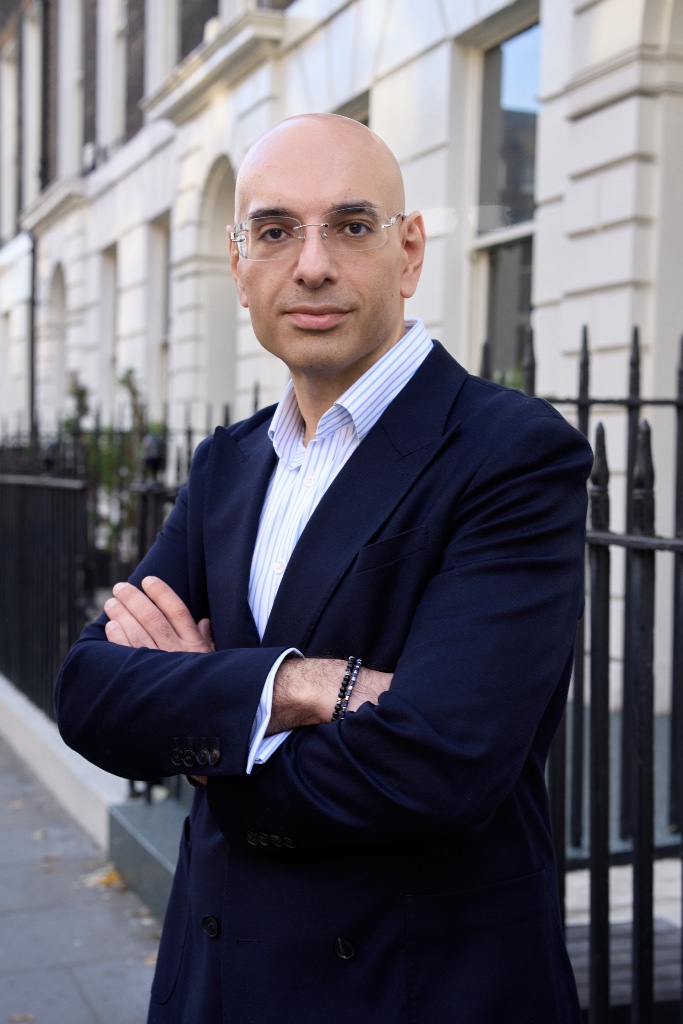
Born in Kuwait and raised in Norway, Dr Ahmed Talib trained at the Royal College of Surgeons in Ireland and has spent almost two decades in clinical practice across the UK. He holds membership of multiple Royal Colleges and serves as a senior clinical advisor to healthcare organisations spanning governmental bodies, established companies, and startups developing clinically validated technology. NordGulf Alliance operates through a curated network of sector specialists, sovereign relationships, and capital partners across six countries. He leads the healthcare practice personally across every engagement.