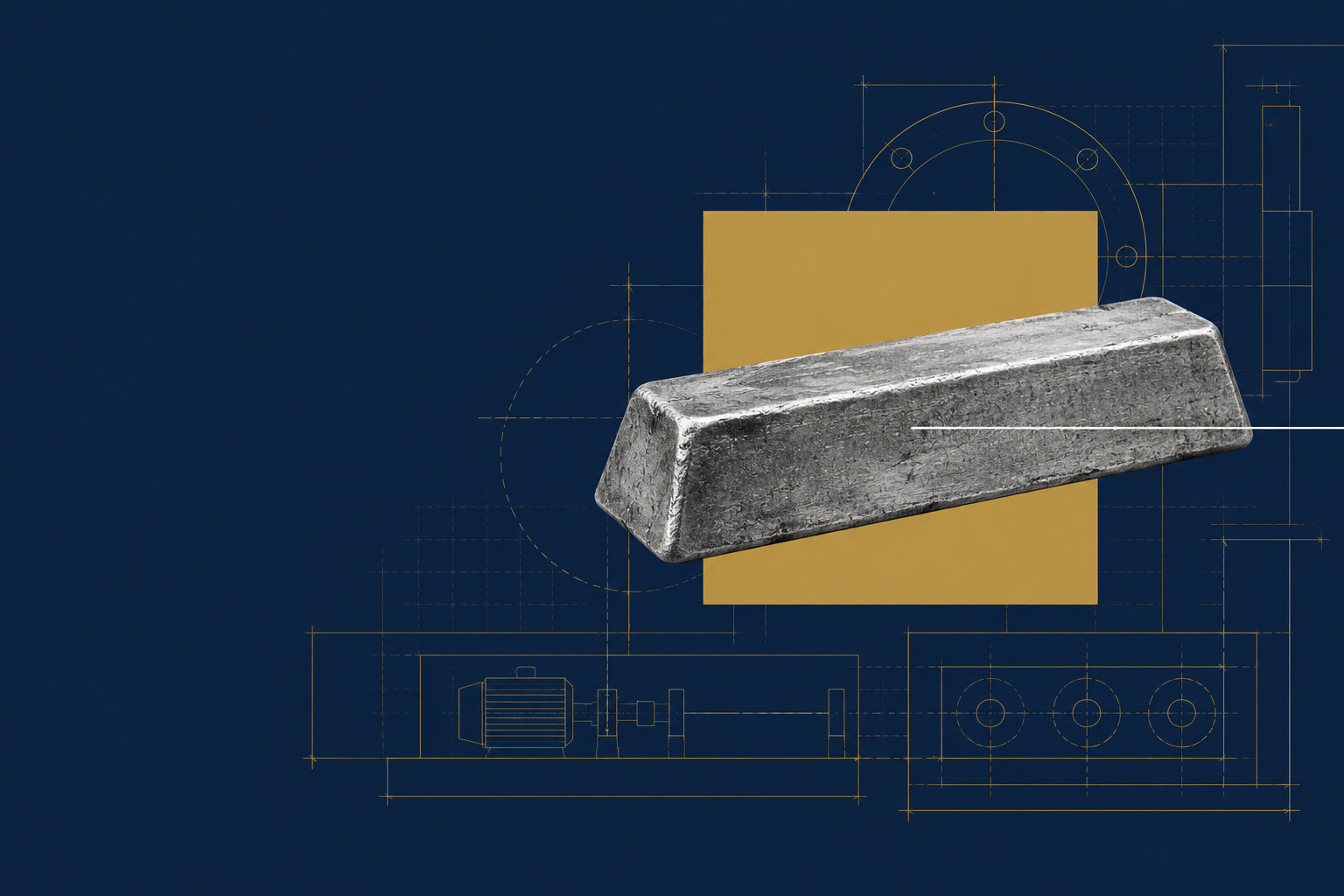
On 2 June, at the Choose France summit, Aluminium Bahrain announced its purchase of the European Union's largest primary aluminium smelter. Roughly USD 2.2 billion for Aluminium Dunkerque, bought from an American private equity fund under an agreement signed in May, with Bpifrance to take six per cent alongside. Closing waits on French and EU approvals, but the shape of the deal is settled. A Gulf industrial company backed by sovereign capital has agreed to buy the plant, the workforce, the energy contracts and the order book. Not a stake in a fund that owns industrial assets. The assets.
Look at who stands behind the buyer. Alba is 69 per cent owned by Mumtalakat, Bahrain's sovereign fund, and a further 21 per cent by Saudi Arabia's Ma'aden, whose controlling shareholder is the Public Investment Fund. Ten years ago this cheque would have gone to a London tower or a private equity sidecar. It went to Dunkerque instead. The capital has changed what it wants to own, and European boards should read the change carefully.
There is a persistent narrative, particularly in the Nordic countries and in Switzerland, that Gulf capital has slowed down. That the sovereign funds are pulling back. That the window has closed.
The narrative is wrong. It confuses direction with volume.
The River Moved, Not the Rain
In the first half of 2026, Gulf sovereign funds committed USD 53.9 billion across 108 deals, a record half-year by Global SWF's count, through a period of regional volatility that the pessimists assumed would freeze everything. Mubadala alone deployed USD 15.2 billion. The year before, the seven major Gulf funds put USD 126 billion to work, of which Mubadala directed USD 12.9 billion into AI and digital assets, the Kuwait Investment Authority six billion and QIA four billion. The GCC funds now manage around USD 5.7 trillion.
What changed is not how much flows. What changed is where it lands.
A decade ago, the default Gulf allocation to Europe was real estate: towers, shopping centres, hotel portfolios. A safe, visible store of value. If you want a picture of that preference, the region already has one: the waqf, the endowment of income-producing property meant to hold its value across generations. For a long time, the European expression of that instinct was glass and steel.
The instinct for permanence has not gone anywhere. What counts as permanent has. The endowment now looks like a smelter in northern France, a cloud region in Saudi Arabia's Eastern Province, a fifty megawatt AI zone built with Amazon in the Kingdom's first designated corridor. The permanent thing is no longer the building. It is the supply chain.
Where the Water Goes Now
Three currents carry Gulf capital in 2026, and none of them looks like the old one.
The first is industrial sovereignty. Alba's Dunkerque acquisition is the clearest example, but it is not alone. Emirates Global Aluminium agreed in April to take an eighty per cent stake in Eco Green, an aluminium recycler in northern Italy, and completed the deal in September 2026, alongside a capacity expansion at its German plant, Leichtmetall. The pattern: Gulf entities buying operational industrial capacity in Europe, not financial exposure to it. The plant, not the fund.
The second is AI infrastructure. Gulf states are building artificial intelligence infrastructure at a pace few regions outside the United States can match. Microsoft's Saudi Arabia East cloud region, in the Eastern Province, is due to open in November 2026. AWS and HUMAIN have committed to up to fifty megawatts within the Kingdom's first AI Zone by 2028, a partnership AWS values at more than USD 5 billion, on top of the USD 5.3 billion it is spending on the cloud region itself. Electricity use by AI-focused data centres jumped fifty per cent in 2025, and the International Energy Agency expects total data centre demand to roughly double to 950 terawatt hours by 2030. The Gulf has the capital. The open question is whether it has the power. That constraint is itself an investment thesis: every megawatt of generation built for an AI corridor in the Gulf needs turbines, cables, cooling systems and engineering that European manufacturers supply.
The third is the second door into Europe. Gulf investment in Central and Eastern Europe grew thirty-eight per cent in 2025 to more than six billion euros, by the GRI Institute's count, with technology assets in Warsaw and Prague trading well below Western valuations and logistics and rental housing replacing trophy offices. The Nordic executive who measures Gulf appetite by what arrives in Stockholm or Zurich is looking at one door of a building that now has several.
The Smelter Tells the Story
European executives who say "the Gulf money has dried up" are looking at their own inbox and mistaking it for the market. The money stopped arriving in the shape they recognised.
The old model was straightforward. A Gulf family office or sovereign entity would take a passive minority stake in a European asset, collect a dividend, attend a board dinner once a year. The relationship ran on one channel: financial return, intermediated by a private bank or a placement agent in London.
That model still exists. But it is no longer the centre of gravity.
The new model is operational. Gulf capital wants to own the means of production, not just the output. It wants the aluminium smelter because aluminium is a strategic input for the defence and construction industries the Gulf is building at home. It wants the data centre because the AI models trained inside it become a national capability. It wants the recycling plant because circular economy regulation in Europe creates a moat that an operational owner can defend and a passive investor cannot.
What the Nordic Board Misses
The Nordic and Swiss executive who hears "Gulf capital has slowed" and adjusts expectations downward is making two errors.
The first is mistaking selectivity for absence. Gulf funds are more selective because their priorities have narrowed. The USD 5.7 trillion is managed by teams that have spent fifteen years learning which European assets generate returns and which merely generate fees. Approval chains that once waved through a London office building now interrogate the energy contract, the grid connection agreement, the regulatory moat.
The second error is waiting to be found. The old model brought Gulf capital to Europe through a small number of intermediaries in London and Geneva. The new model runs through sector-specific channels: energy transition advisers, AI infrastructure consultants, industrial M&A houses. A Nordic renewable energy company with a four hundred megawatt operating portfolio and EBRD financing is a more interesting proposition to a Gulf sovereign in 2026 than a Class A office tower in Mayfair. But the renewable energy company has to be visible in the right corridor, structured to the right standard, and introduced by someone who understands both the shura, the collective consultation that shapes a Gulf investment committee, and the förankring, the consensus-building that governs a Nordic board.
The companies that understand this are already in conversation.
The Compass, Not the Volume
Every allocation tells you what a culture values. When the Gulf bought towers, it valued permanence and prestige. When it buys smelters, data corridors and recycling plants, it values capacity and control. That is a statement about where the next fifty years of value will sit.
The capital did not leave. It changed its mind about what is worth owning. The question for European boards is whether they are still standing in the lobby of a building the Gulf no longer wants to buy. Which of your assets would a Gulf sovereign want to operate, not merely own? Start there.
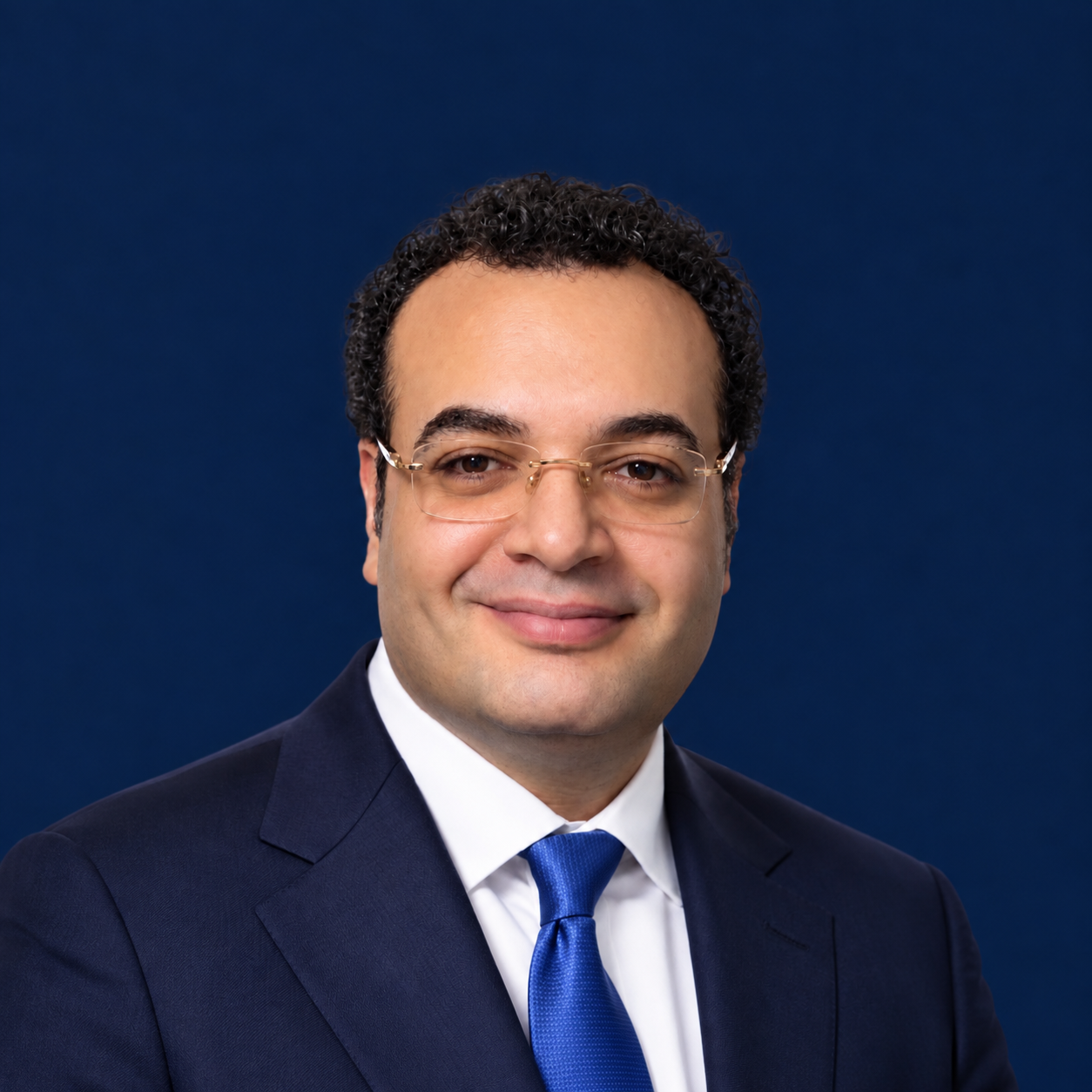
Born in Kuwait and raised in Norway, Mr Alan Talib has spent two decades navigating the space where Gulf capital and Nordic innovation meet. He is CEO of NordGulf Alliance, a strategic advisory firm that works quietly and selectively at the intersection of sovereign ambition and validated technology. The firm operates through a curated network of sector specialists, sovereign relationships, and capital partners across six countries. He leads every engagement personally.
This article is analysis of publicly available information. It does not constitute investment, legal or financial advice. Figures are current as at 10 September 2026.