This excerpt begins partway into the chapter, in a Helsinki café, with a Finnish CEO two years into a failed entry to the UAE market. Reproduced with the author's permission.
"We've been trying to enter the UAE market for two years," he said, his voice carrying that distinctive Finnish blend of pride and pragmatism. His fingers stopped their drumming to gesture at the folder on the table between us. "We have superior technology, competitive pricing, and a strong track record in Europe." He leaned forward, the leather creaking beneath him. "Why isn't it working?"
The question hung in the air between us, mixing with the steam from our coffees. Around us, the morning crowd of Helsinki's business elite conducted their usual symphonic dance of quiet deals and discussions, while the Nordic executive waited for an answer that would help him understand why excellence alone wasn't enough to crack the Gulf market.
Three months later, the scene couldn't have been more different. In a majlis-styled meeting room atop one of Abu Dhabi's gleaming towers, the afternoon sun painted golden patterns through the ornate mashrabiya screens. The Finnish business leader, who had traded his winter wool suit for a lighter linen blend more suited to the Gulf heat, sat beside his Emirati counterpart. The transformation in his demeanour was striking. Gone was the frustrated drumming of fingers, replaced by the relaxed posture of someone who had finally learned to move at the Gulf's pace.
As he leaned forward to sign the partnership agreement, his pen hovering over the embossed paper, I caught a glimpse of the same folder he'd shown me in Helsinki. It now sat unopened at the edge of the massive oak table, no longer the centrepiece of his strategy but merely a prop in a larger performance. The Emirati Chairman placed a gentle hand on the technology executive's shoulder, a gesture of familiarity that would have been unthinkable three months ago.
The journey from that frost-covered morning in Helsinki to this sun-soaked afternoon in Abu Dhabi revealed a fundamental truth about the UAE market. The Finnish company had arrived with Nordic precision: armed with meticulously crafted PowerPoints, data-driven projections, and technical specifications that could have filled volumes. Every slide was perfect, every number verified, every chart compelling. But their breakthrough came only when they set aside the presentations and began seeing the market through a different lens, not as a territory to be conquered with facts and figures, but as a community to be joined through patience and presence.
Understanding the UAE Market
The Finnish company's journey provides a practical example of how to successfully enter the Gulf market. While this case focuses on their entry into the UAE, the steps they followed, building trust, adapting to cultural norms, and investing in relationships, can be applied across the Gulf region, where similar relational dynamics govern business practices. Their initial misstep was treating the UAE as an extension of their European model. Success came when they embraced the market on its own terms, understanding its rhythms and cultural nuances.
One of their first steps was appointing a dedicated UAE relationship manager, someone whose sole focus was building trust and connections in the region. They also adjusted their timelines, recognising that success in the UAE requires patience. Instead of expecting immediate results, they allowed six months for relationship-building before initiating formal business discussions.
Most importantly, they reframed their presentations. Instead of leading with technical specifications, they told a story about their company's history, values, and long-term commitment to the UAE market. Their technology became a means of creating shared value, not just a product to sell.
"We realised we weren't just entering a market," the CEO reflected. "We were entering a community, and we needed to show we were here to stay."
Building Market Trust: Four Phases
Their journey through the UAE illustrates a framework that can be applied across the Gulf market. These four phases, establishing trust, engaging with local networks, navigating market dynamics, and scaling success, are essential steps for entering any Gulf region market effectively.
Phase One: Establishing Market Foundations. The first step was restructuring their team to meet the market's expectations. They selected individuals with both technical expertise and interpersonal skills, and they hired a cultural advisor who had lived and worked in both regions.
"We realised cultural adaptation wasn't a bonus. It was essential," the HR director explained. "Understanding the market's culture was the key to building trust."
The team underwent rigorous preparation, learning about Emirati market norms, from the etiquette of handling business cards to the significance of family connections. They spent time with Nordic companies already succeeding in the UAE, gathering practical insights into what worked and why.
Phase Two: Entering the Market. Instead of leading with technical data, the Finnish team focused on becoming visible and engaged in the community. They joined local business councils, attended industry events, and participated in cultural activities, not to sell, but to listen and learn.
A breakthrough came when they sponsored a local STEM education initiative in Abu Dhabi. This wasn't about marketing; it was a genuine contribution to the community. Yet, it gave them a meaningful way to engage with stakeholders and demonstrated their long-term commitment to the UAE.
"We stopped focusing on immediate returns," the CFO admitted. "We began measuring progress in terms of relationships and integration into the market."
Phase Three: Navigating Market Dynamics. By the time they began pursuing business opportunities, the market had started seeing them as a genuine participant rather than an outsider. Their technical presentations were framed by a narrative of shared goals and mutual benefit.
One pivotal moment came during a critical negotiation. A technical issue threatened to derail the project. In the past, this might have been a deal-breaker. But the trust they had built allowed both sides to work together to find a creative solution.
"In another market, this could have fallen apart," the project manager noted. "Here, the relationships we built kept us at the table."
Phase Four: Scaling Market Success. With initial success came new challenges: how to scale operations while preserving the trust and personal connections that had driven their entry. They adopted a "dual-speed" model, maintaining high-touch engagement for critical relationships while streamlining routine operations for efficiency.
They also developed a hybrid approach to decision-making. While retaining Nordic transparency and efficiency, they incorporated the UAE's emphasis on relationship-based processes. This balance allowed them to grow without losing the trust they had built.
Lessons from the UAE Market
The Finnish company's success underscores the importance of adaptability and humility when entering a culturally distinct market. Early attempts at relationship-building were awkward. Their first majlis and informal meetings felt forced, with silences they misinterpreted as disinterest. But they persisted, learning from their mistakes and gradually building genuine connections.
A breakthrough moment came during an informal gathering at a partner's home. Over shared meals and casual conversation, they built more trust in one evening than in months of formal meetings. "We realised the social aspects of the market weren't distractions," the CEO reflected. "They were the market."
Financial strategies also evolved. What initially seemed like unnecessary costs, frequent visits, sponsorships, and social events, became recognised as vital investments. These activities weren't overhead; they were the currency of the market.
From Vision to Reality
This journey wasn't just about signing a contract. It was about understanding how to approach a market that values relationships as much as results. The Finnish team learned that succeeding in the UAE market isn't about adopting a new identity but about blending strengths. By combining Nordic precision and transparency with Emirati relationship-building and vision, they created a partnership built to last.
As the Finnish CEO reflected after signing the agreement in Abu Dhabi, "We thought we were selling technology. But what we were really selling was credibility, the credibility to be part of this market's future."
This is the essence of succeeding in the UAE market: entering not as a vendor but as a partner, not as an outsider but as a contributor to the community. It's a lesson that extends far beyond the Gulf, reminding us that every market is, at its heart, about people.
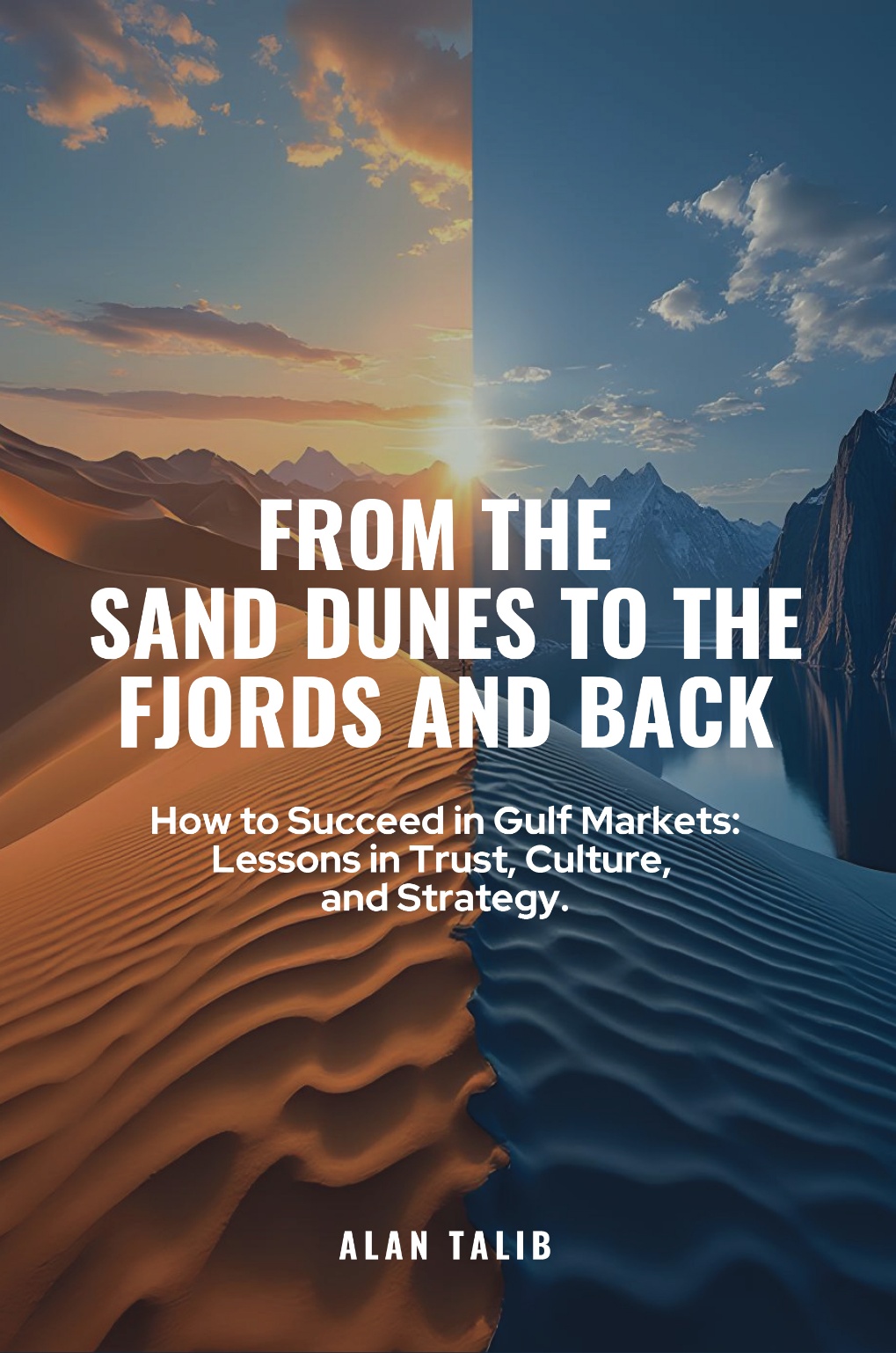
From the Sand Dunes to the Fjords and Back
Alan Talib's account of how trust works on both sides of the Nordic-Gulf corridor, and what it takes to enter Gulf markets as a partner rather than a vendor.
Available on Amazon →